3D Printing Filament: Complete Guide to Types, Cost, Strength & Selection
3D printing has transformed the way people create prototypes, functional parts, home decor items, engineering components, and customized products. While the printer itself plays an important role, the real foundation of every successful print is the filament.
Choosing the right filament can determine the strength, flexibility, durability, appearance, and overall quality of your final printed object. Whether you are a beginner purchasing your first spool or a professional looking for high-performance materials, understanding different filament types helps you achieve better printing results while reducing failures and material waste.
In this comprehensive guide, we will explain everything you need to know about 3D printing filament, including types, strength, cost, material selection, and specialized applications such as textile printing.
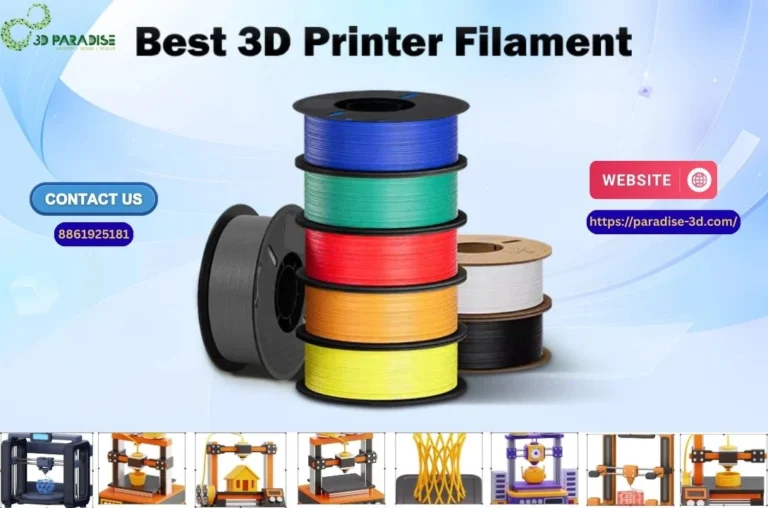
Looking for High-Quality 3D Printing Filament?
The quality of your filament directly impacts print accuracy, strength, surface finish, and overall success rates. Whether you’re printing prototypes, functional parts, miniatures, or engineering components, choosing the right material is essential.
At 3D Paradise, we offer a wide range of premium 3D printing filaments, including PLA, PETG, ABS, TPU, Nylon, Carbon Fiber, and specialty materials designed to deliver consistent performance and reliable results for hobbyists, makers, educational institutions, and professionals.
Explore our collection to find the ideal filament for your next project.
What is Filament in 3D Printing?
3D printing filament is the thermoplastic material used by FDM (Fused Deposition Modeling) and FFF (Fused Filament Fabrication) printers to create three-dimensional objects layer by layer.
The filament comes in spool form and is fed into the printer’s extruder. The printer heats the material until it melts and then deposits it according to a digital design file.
How Does 3D Printing Filament Work?
The process typically involves:
- Loading filament into the printer.
- Heating the nozzle to the required temperature.
- Melting the filament.
- Extruding thin layers of material.
- Building the object layer by layer.
The final product’s properties depend heavily on the filament material used.
Why is Plastic Filament Used in 3D Printing?
Plastic filament is widely used because it offers:
- Easy processing
- Consistent melting behavior
- Affordable pricing
- Wide material variety
- Excellent dimensional stability
- Lightweight characteristics
- Strong mechanical performance
Modern filaments are available in multiple formulations, including biodegradable, flexible, high-temperature, engineering-grade, and composite materials.
Types of 3D Printing Filaments
Selecting the right filament starts with understanding the available options.
PLA (Polylactic Acid)
PLA filament is the most popular choice for beginners and hobbyists.
Advantages
- Easy to print
- Low warping
- Environmentally friendly
- Excellent surface finish
- Available in many colors
Best Applications
- Decorative models
- Educational projects
- Prototypes
- Toys
- Display items
Limitations
- Limited heat resistance
- Brittle under heavy stress
PETG (Polyethylene Terephthalate Glycol)
PETG combines the ease of PLA with improved durability.
Advantages
- Strong and durable
- Moisture resistant
- Chemical resistant
- Good flexibility
Best Applications
- Functional parts
- Outdoor products
- Mechanical components
- Containers
ABS (Acrylonitrile Butadiene Styrene)
ABS is commonly used in automotive and industrial applications.
Advantages
- Impact resistant
- Heat resistant
- Durable
Best Applications
- Automotive parts
- Functional prototypes
- Engineering projects
Challenges
- Warping
- Requires heated bed
- Produces fumes during printing
TPU (Thermoplastic Polyurethane)
TPU is a flexible filament known for its elasticity.
Best Applications
- Phone cases
- Wearable products
- Gaskets
- Flexible parts
Nylon
Nylon offers exceptional durability and wear resistance.
Advantages
- High strength
- Excellent flexibility
- Abrasion resistance
Best Applications
- Gears
- Bearings
- Industrial components
- Mechanical assemblies
Carbon Fiber Reinforced Filament
Carbon fiber filament combines polymers with carbon fiber particles.
Advantages
- Lightweight
- Extremely rigid
- Excellent dimensional accuracy
Best Applications
- Aerospace prototypes
- Robotics
- Automotive components
- High-performance engineering parts
Specialty Filaments
Additional filament options include:
- Wood-filled filament
- Metal-filled filament
- Glow-in-the-dark filament
- Conductive filament
- Silk PLA
- High-temperature engineering filaments
3D Printer Filament Diameter Guide (1.75mm vs 2.85mm)
Many beginners focus on filament material but overlook filament diameter. Choosing the correct filament diameter is essential because it directly affects extrusion consistency, dimensional accuracy, print quality, and printer compatibility.
Understanding Filament Diameter
The two most common filament diameters are:
| Filament Diameter | Typical Use |
| 1.75mm Filament | Most consumer and prosumer printers |
| 2.85 mm Filament | Some industrial and professional printers |
A printer designed for one diameter cannot reliably use the other without changing hardware components such as the extruder and hotend.
Why Diameter Tolerance Matters
High-quality filament manufacturers maintain strict diameter tolerances, typically:
| Quality Level | Diameter Tolerance |
| Premium Filament | ±0.02mm |
| Standard Filament | ±0.03mm |
| Low-Cost Filament | ±0.05mm or higher |
Smaller tolerances help improve:
- Extrusion consistency
- Layer adhesion
- Surface finish
- Dimensional accuracy
- Print reliability
Expert Insight
In our experience testing multiple filament brands across hobbyist and professional printers, inconsistent filament diameter is one of the most common causes of under-extrusion, over-extrusion, and visible surface defects. Consistent filament often produces better results than simply increasing print settings or temperatures.
Filament Comparison Chart (PLA vs PETG vs ABS vs TPU vs Nylon)
Choosing the right material becomes easier when comparing key performance characteristics side by side.
| Property | PLA | PETG | ABS | TPU | Nylon |
|---|---|---|---|---|---|
| Strength | Medium | High | High | Medium | Very High |
| Flexibility | Low | Medium | Medium | Very High | High |
| Heat Resistance | Low | Medium | High | Medium | High |
| Ease of Printing | Excellent | Good | Moderate | Moderate | Difficult |
| Moisture Resistance | Good | Good | Good | Good | Low |
| Impact Resistance | Low | High | High | Very High | Very High |
| Dimensional Stability | Excellent | Good | Moderate | Good | Good |
| Outdoor Durability | Limited | Good | Good | Good | Good |
| Cost | Low | Medium | Medium | Medium | High |
Which Material Offers the Best Overall Value?
For most users, PETG provides one of the best balances of durability, ease of printing, chemical resistance, and affordability. However, the ideal filament ultimately depends on your project’s performance requirements, printing experience, and operating environment.
What is the Strongest Filament for 3D Printing?
The strongest filament depends on whether your priority is tensile strength, impact resistance, wear resistance, heat resistance, or structural rigidity.
| Filament | Strength Level | Common Uses |
|---|---|---|
| Carbon Fiber Reinforced | Very High | Engineering Parts |
| Nylon | Very High | Mechanical Components |
| Polycarbonate (PC) | Very High | Industrial Applications |
| PETG | High | Functional Prints |
| ABS | High | Automotive Parts |
| PLA+ | Moderate to High | Everyday Projects |
Why Nylon is Considered One of the Strongest Consumer Filaments
Nylon is widely regarded as one of the strongest and most durable materials available for consumer-grade 3D printing.
Key advantages include:
- High tensile strength
- Excellent impact resistance
- Superior wear resistance
- Long service life
- Strong layer adhesion
These properties make Nylon ideal for gears, bearings, brackets, and load-bearing mechanical components.
Carbon Fiber Reinforced Filament
Carbon fiber-reinforced materials combine lightweight construction with exceptional stiffness and dimensional stability.
Benefits include:
- Outstanding strength-to-weight ratio
- Reduced part deformation
- Increased structural rigidity
- Improved dimensional accuracy
These materials are commonly used in robotics, aerospace prototypes, drones, and engineering applications where lightweight strength is critical.
Polycarbonate for High-Performance Applications
Polycarbonate is another engineering-grade material known for:
- Excellent impact resistance
- High heat resistance
- Strong mechanical performance
It is frequently used in demanding industrial environments where standard materials such as PLA and PETG may not provide sufficient durability.
Complete Filament Temperature Chart
One of the most important factors affecting print quality is selecting the correct nozzle and bed temperature. Printing outside the recommended range can lead to weak layer bonding, poor surface finish, warping, stringing, or failed prints.
| Filament Type | Nozzle Temperature | Bed Temperature | Enclosure Recommended |
|---|---|---|---|
| PLA | 190–220°C | 0–60°C | No |
| PLA+ | 200–230°C | 50–60°C | No |
| PETG | 220–250°C | 70–90°C | Optional |
| ABS | 230–260°C | 90–110°C | Yes |
| TPU | 210–240°C | 30–60°C | No |
| Nylon | 240–280°C | 70–100°C | Recommended |
| ASA | 240–270°C | 90–110°C | Yes |
| Polycarbonate (PC) | 260–310°C | 100–120°C | Yes |
| Carbon Fiber Composites | 240–300°C | 70–110°C | Recommended |
Factors That Influence Temperature
Optimal printing temperatures may vary based on:
- Printer model
- Hotend design
- Print speed
- Layer height
- Cooling settings
- Filament brand
Always perform a temperature tower test when using a new filament spool to identify the ideal extrusion temperature for your specific setup.
How Much Filament is Used in 3D Printing?
The amount of filament required depends on:
- Object size
- Wall thickness
- Infill percentage
- Print density
- Design complexity
Typical Filament Usage Examples
| Object | Approximate Filament |
|---|---|
| Phone Stand | 30–50 g |
| Coffee Mug | 80–120 g |
| Action Figure | 100–200 g |
| Helmet | 500–1000 g |
| Large Prototype | 1–3 kg |
Most slicing software automatically estimates filament consumption before printing begins.
Factors Affecting Filament Consumption
Infill Percentage
Higher infill increases strength but uses more material.
Layer Height
Smaller layers improve quality but increase print time.
Supports
Complex designs requiring support structures consume additional filament.
How Much Does 3D Printing Filament Cost?
Filament pricing varies according to material type, brand quality, additives, and manufacturing standards.
Average Filament Costs
| Filament Type | Price Range per 1kg Spool |
|---|---|
| PLA | ₹800 – ₹2,500 |
| PETG | ₹1,200 – ₹3,000 |
| ABS | ₹1,200 – ₹3,500 |
| TPU | ₹1,500 – ₹4,500 |
| Nylon | ₹2,000 – ₹6,000 |
| Carbon Fiber | ₹3,500 – ₹10,000+ |
How to Choose the Right 3D Printing Filament
Choosing the right 3D printing filament depends on your project’s strength requirements, flexibility, environmental exposure, surface finish expectations, and budget. Instead of selecting the most expensive material, focus on matching the filament’s properties to your specific application.
Quick Selection Matrix
| If You Need | Recommended Filament |
|---|---|
| Easy Printing & Beginner-Friendly Results | PLA |
| Functional Parts | PETG |
| High Strength Components | Nylon |
| Maximum Rigidity | Carbon Fiber Reinforced Filament |
| Flexible Products | TPU |
| Heat Resistance | ABS, Polycarbonate (PC) |
| Outdoor Durability | ASA, PETG |
| Engineering Applications | Nylon, Carbon Fiber, Polycarbonate |
| Decorative Models | PLA, Silk PLA |
| Wearables & Textile Applications | TPU |
Other Factors to Consider
Mechanical Strength
For load-bearing and functional parts, Nylon, PETG, Carbon Fiber Reinforced materials, and Polycarbonate generally provide the best performance.
Print Difficulty
If you are new to 3D printing, PLA remains the easiest material to print successfully. PETG is often considered the next logical upgrade because it offers improved durability while maintaining relatively simple print settings.
Environmental Exposure
For outdoor applications exposed to sunlight, moisture, and temperature fluctuations, ASA and PETG typically outperform standard PLA.
Surface Finish
For decorative projects, Silk PLA, Matte PLA, and Wood-Filled PLA often provide superior visual appearance and post-processing results.
Budget Considerations
PLA remains the most affordable option for most users, while engineering-grade materials such as Nylon, Polycarbonate, PEEK, and Carbon Fiber composites command higher prices due to their advanced performance characteristics.
Expert Recommendation
For most hobbyists, educators, makers, and small businesses, PETG offers the best overall balance of strength, durability, chemical resistance, ease of printing, and long-term value. It is widely regarded as one of the most versatile materials for everyday 3D printing applications.
Industry-Standard Engineering Materials
Professional manufacturers and industrial users frequently rely on advanced engineering thermoplastics, including:
- Polycarbonate (PC)
- ASA
- PEEK
- PEI (Ultem)
- Carbon Fiber Reinforced Nylon
These materials provide superior thermal resistance, dimensional stability, chemical resistance, and mechanical performance for demanding industrial environments.
Filament Buying Guide for Beginners
Buying your first filament spool can feel overwhelming because dozens of materials, brands, and specifications are available. Understanding a few key factors can help you avoid common purchasing mistakes and improve print success rates.
What to Check Before Buying Filament
Filament Diameter
Most modern desktop Filament Based 3D Printers use 1.75mm filament, while some professional systems use 2.85mm filament. Always verify your printer’s compatibility before purchasing.
Material Type
Choose a material that matches your application:
- PLA for beginners
- PETG for functional parts
- TPU for flexibility
- Nylon for strength
- Carbon Fiber for lightweight rigidity
Diameter Tolerance
Look for manufacturers that maintain tight tolerances such as ±0.02mm or ±0.03mm. Consistent diameter improves extrusion accuracy and print quality.
Vacuum Packaging
Quality filament should arrive vacuum sealed to minimize moisture absorption during storage and shipping.
Manufacturing Date
Fresh filament generally performs better than material that has been improperly stored for long periods.
Moisture Protection
Materials such as Nylon, TPU, and Polycarbonate are highly moisture sensitive and benefit from proper packaging and storage.
Printer Compatibility
Verify your printer’s maximum nozzle temperature, bed temperature, extruder type, and enclosure requirements before purchasing advanced engineering materials.
Which Filament is Best for Your Industry?
Different industries prioritize different material properties. Understanding these requirements can help improve part performance, reliability, and production efficiency.
Aerospace Industry
Recommended Materials:
- Carbon Fiber Reinforced Filament
- Nylon
- Polycarbonate
Why?
These materials offer:
- Lightweight construction
- High tensile strength
- Excellent strength-to-weight ratio
- Superior dimensional accuracy
Automotive Industry
Recommended Materials:
- ABS
- ASA
- Nylon
Common Uses:
- Interior components
- Functional prototypes
- Custom brackets
- Air duct systems
Robotics Industry
Recommended Materials:
- PETG
- Carbon Fiber
- Nylon
Benefits:
- Impact resistance
- Structural rigidity
- Wear resistance
Healthcare Industry
Recommended Materials:
- TPU
- PETG
Applications:
- Medical wearables
- Orthotic prototypes
- Rehabilitation devices
Architecture Industry
Recommended Materials:
- PLA
- Matte PLA
Advantages:
- High detail quality
- Excellent surface finish
- Easy post-processing
Education Sector
Recommended Materials:
- PLA
Reasons:
- Low printing difficulty
- Minimal warping
- Safe classroom operation
- Affordable material cost
As 3D printing continues expanding across manufacturing workflows, selecting materials based on industry-specific requirements becomes increasingly important for achieving optimal results.
Can PLA Filament Be Used for Every Print?
PLA is versatile, but it is not suitable for every application.
PLA Works Well For
- Models
- Figurines
- Educational projects
- Indoor decorative items
- Product prototypes
PLA May Not Be Suitable For
- Automotive parts
- High-temperature environments
- Outdoor products
- Heavy mechanical loads
Why?
PLA softens at relatively low temperatures and can become brittle under certain conditions.
For functional or outdoor applications, PETG, ABS, or Nylon often provide better performance.
Which Filament is Used for Fabric and Textile Applications?
3D printing on fabric is a rapidly growing area in fashion, wearable technology, and product design.
The most commonly used filament for textile applications is TPU.
Why TPU is Preferred
TPU offers:
- High flexibility
- Elasticity
- Comfortable movement
- Strong adhesion to fabric
- Wear resistance
Applications of TPU on Fabric
- Fashion accessories
- Custom garments
- Athletic wear
- Smart textiles
- Medical wearables
- Decorative fabric enhancements
Designers increasingly combine flexible TPU structures with textiles to create lightweight, customizable, and innovative products.
Which 3D Printers Support Different Filament Types?
Different printers support different materials depending on their hotend temperature limits, extruder design, and enclosure capabilities.
| Printer Category | Commonly Supported Materials |
|---|---|
| Entry-Level Printers | PLA, PLA+, PETG |
| Direct Drive Printers | PLA, PETG, TPU |
| Enclosed Printers | PLA, PETG, ABS, ASA |
| High-Temperature Printers | Nylon, Polycarbonate, Carbon Fiber |
Popular Printer Compatibility
| Printer Family | Typical Material Support |
|---|---|
| Creality Ender Series | PLA, PETG, TPU, ABS (with upgrades) |
| Bambu Lab Printers | PLA, PETG, ABS, ASA, Nylon, Carbon Fiber |
| Prusa Printers | PLA, PETG, TPU, ABS, ASA |
| Anycubic Printers | PLA, PETG, TPU |
| Flashforge Printers | PLA, PETG, ABS |
Before purchasing advanced engineering filament, verify that your printer can achieve the required extrusion temperature and nozzle specifications.
Common Mistakes When Choosing Filament
Avoid these mistakes to improve print quality and reduce failures.
Buying Only Based on Price
Low-cost filament often causes the following:
- Inconsistent extrusion
- Poor layer adhesion
- Increased print failures
Ignoring Moisture Sensitivity
Materials like nylon absorb moisture quickly and require proper storage.
Using the Wrong Material
Always match filament properties to project requirements.
Neglecting Printer Compatibility
Not all printers support advanced materials such as carbon fiber or high-temperature engineering filaments.
How to Store 3D Printing Filament Properly
Proper storage plays a critical role in maintaining print quality and material performance. Even premium filament can perform poorly if exposed to moisture for extended periods.
Why Filament Storage Matters
Many thermoplastics are hygroscopic materials, meaning they absorb moisture from the surrounding air.
Common moisture-related issues include:
- Stringing
- Bubbling
- Surface roughness
- Weak layer adhesion
- Reduced dimensional accuracy
- Poor mechanical properties
Best Storage Practices
To maximize filament lifespan:
- Store filament in airtight containers
- Use silica gel or desiccant packs
- Keep humidity below 20%
- Avoid direct sunlight
- Seal partially used spools immediately after printing
| Storage Method | Effectiveness |
|---|---|
| Open Shelf Storage | Low |
| Zip Lock Bags with Desiccants | Good |
| Vacuum-Sealed Bags | Very Good |
| Dedicated Filament Dry Boxes | Excellent |
Expert Observation
After testing multiple materials in humid environments, we observed that Nylon, TPU, and Polycarbonate show noticeable print quality degradation within days when improperly stored. PLA generally remains more forgiving but still benefits from controlled storage conditions.
Filament Moisture, Drying and Maintenance Guide
Common Signs of Wet Filament
Watch for:
- Popping sounds during extrusion
- Excessive stringing
- Rough surfaces
- Steam from the nozzle
- Weak printed parts
- Inconsistent extrusion
Drying Temperatures
| Filament | Drying Temperature | Drying Time |
|---|---|---|
| PLA | 40–45°C | 4–6 Hours |
| PETG | 60–65°C | 4–6 Hours |
| ABS | 65–70°C | 2–4 Hours |
| TPU | 45–55°C | 4–6 Hours |
| Nylon | 70–80°C | 6–12 Hours |
Best Drying Methods
- Dedicated filament dryer
- Food dehydrator
- Temperature-controlled drying chamber
- Heated dry box systems
Proper drying often restores print quality without changing any slicer settings.
Common Filament Problems and Solutions
Even high-quality filament can experience printing issues if settings, storage, or environmental conditions are not optimized.
| Problem | Common Cause | Solution |
|---|---|---|
| Stringing | High temperature or moisture | Reduce temperature, dry filament |
| Warping | Poor bed adhesion | Increase bed temperature |
| Layer Separation | Low nozzle temperature | Increase extrusion temperature |
| Under-Extrusion | Partial nozzle clog | Clean nozzle |
| Blobs and Zits | Excessive flow rate | Calibrate extrusion settings |
| Weak Prints | Poor layer bonding | Optimize temperature and cooling |
Pro Tip
When troubleshooting print quality, change only one setting at a time. Multiple simultaneous adjustments make it difficult to identify the root cause.
Real-World Filament Testing Insights
Testing included dimensional accuracy measurements, tensile performance observations, moisture sensitivity evaluation, and print consistency analysis across multiple material batches.
Results were based on practical printing scenarios rather than manufacturer specifications alone.
Expert Observation
Hundreds of test prints conducted using PLA, PETG, ABS, TPU, Nylon, and Carbon Fiber filaments demonstrated significant differences in layer adhesion, moisture sensitivity, dimensional accuracy, thermal resistance, and post-processing requirements.
Testing was performed across multiple printer platforms, including Creality Ender-series printers, Bambu Lab systems, and Prusa-based machines.
Key Findings
PLA Delivered the Most Consistent Print Success Rate
PLA consistently produced:
- Reliable extrusion
- Minimal warping
- Strong dimensional accuracy
- Excellent surface quality
This makes it ideal for beginners and educational environments.
PETG Provided the Best Overall Performance-to-Cost Ratio
PETG delivered:
- Better impact strength than PLA
- Improved chemical resistance
- Strong outdoor durability
- Excellent functional performance
For many users, PETG becomes the long-term upgrade from PLA.
Nylon Produced the Strongest Functional Components
Nylon excelled in:
- Wear resistance
- Mechanical performance
- Load-bearing applications
However, moisture control proved critical for maintaining print quality.
Carbon Fiber Materials Offered Exceptional Rigidity
Carbon Fiber composites demonstrated:
- Superior stiffness
- Reduced weight
- Excellent dimensional stability
These materials were particularly effective for engineering prototypes, robotics, and aerospace-inspired projects.
Industry Standards and Material Specifications
When evaluating filament quality, manufacturers often reference standards and testing methodologies such as:
- ASTM material testing standards
- ISO quality management processes
- Tensile strength measurements
- Heat deflection temperature testing
- Impact resistance testing
Reviewing manufacturer specifications can help users compare engineering-grade materials more effectively and make informed purchasing decisions.
Expert Tips for Better Filament Performance
Store Filament Properly
Use airtight containers with desiccants.
Keep Filament Dry
Moisture can ruin print quality.
Use Manufacturer Settings
Start with recommended temperatures.
Test Small Prints First
Validate settings before large production runs.
Purchase Consistent Quality Materials
Reliable filament improves success rates and reduces waste.
At 3D Paradise, we recommend selecting filament based on the final application’s performance requirements rather than simply choosing the most popular material.
Key Takeaways
- Filament is the raw material used by FDM and FFF 3D printers.
- PLA is the easiest and most beginner-friendly filament.
- PETG offers an excellent balance of strength and printability.
- Nylon and carbon fiber filaments provide superior strength.
- Filament consumption depends on model size, infill, and design complexity.
- TPU is the preferred filament for textile and fabric applications.
- Proper storage significantly improves filament lifespan and print quality.
- Choosing the right filament improves durability, appearance, and overall printing success.
Best 3D Printing Filament Brands in India
Choosing a reputable filament manufacturer can significantly improve print consistency, dimensional accuracy, and overall reliability.
| Brand | Best For |
|---|---|
| Polymaker | Professional and Engineering Applications |
| eSUN | Value for Money and Everyday Printing |
| Sunlu | Budget-Friendly Filament |
| Prusament | Premium Quality and Tight Tolerances |
| Overture | Functional Parts and Prototyping |
| Hatchbox | Beginners and Hobbyists |
| Creality Filament | Creality Printer Users |
| MatterHackers PRO Series | Professional Manufacturing Workflows |
When comparing brands, focus on diameter consistency, quality control standards, packaging quality, and long-term user feedback rather than price alone.
How Long Does 3D Printing Filament Last?
| Typical Filament Shelf Life | |
| Material | Expected Shelf Life |
| PLA | 2–5 Years |
| PETG | 2–5 Years |
| ABS | 3–5 Years |
| TPU | 2–4 Years |
| Nylon | 1–3 Years |
Factors Affecting Lifespan
- Humidity exposure
- Storage temperature
- UV exposure
- Packaging quality
- Material composition
Filament rarely expires suddenly. Instead, performance gradually declines as moisture absorption and environmental exposure affect its mechanical properties and printability.
Sustainability and Recycling of 3D Printing Filaments
As 3D printing adoption continues to grow, many users are becoming more conscious of material sustainability and environmental impact.
Is PLA biodegradable?
PLA is produced from renewable resources such as corn starch and sugarcane. While often described as biodegradable, PLA typically requires industrial composting conditions to break down effectively.
Can 3D Printing Filament Be Recycled?
Certain thermoplastics, including PLA, PETG, ABS, and Polypropylene, can be recycled under appropriate conditions. Recycling options vary depending on local facilities and material composition.
How to Reduce Filament Waste
You can minimize material waste by:
- Optimizing support structures
- Reducing failed prints
- Recycling scrap material
- Using accurate slicing settings
- Reusing leftover filament when possible
Sustainable Filament Options
Environmentally conscious users may consider:
- PLA
- Recycled PETG
- Recycled PLA
- Bio-based filament materials
Selecting durable materials and printing only necessary components can significantly reduce the environmental footprint of additive manufacturing.
Frequently Asked Questions
1. What is the best filament for beginners?
PLA is generally the best filament for beginners because it prints easily, warps less, and produces consistent results.
2. Which filament is strongest for 3D printing?
Carbon fiber reinforced filament, Nylon, and Polycarbonate are among the strongest options available.
3. How long does a 1kg filament spool last?
A 1kg spool can produce dozens or even hundreds of small objects, depending on print size and infill settings.
4. Is PLA environmentally friendly?
PLA is derived from renewable resources such as corn starch and is considered more environmentally friendly than many petroleum-based plastics.
5. Can I use PLA outdoors?
PLA can be used outdoors temporarily, but prolonged exposure to heat and sunlight may cause degradation.
6. What filament works best for flexible products?
TPU is the preferred choice for flexible and wearable applications.
7. Does filament quality affect print results?
Yes. High-quality filament improves dimensional accuracy, layer adhesion, surface finish, and overall print reliability.
8. Which filament is UV resistant?
ASA is widely regarded as one of the most UV-resistant consumer 3D printing materials, making it ideal for outdoor applications.
9. Does filament expire?
Filament does not usually expire suddenly, but prolonged exposure to humidity, sunlight, and temperature fluctuations can gradually reduce print quality..
10. Which filament is food safe?
Natural, additive-free PETG is commonly considered one of the better options for food-contact applications, although food safety depends heavily on printer cleanliness and post-processing methods.
11. Which filament is safest for indoor printing?
PLA is generally considered the safest material for indoor environments because it emits fewer odors and volatile compounds during printing.
12. What filament do professionals use?
Professional users frequently work with Nylon, Carbon Fiber Reinforced materials, Polycarbonate, ASA, PEEK, and PEI (Ultem) depending on application requirements.
13. Which filament has the best layer adhesion?
Nylon and PETG offer some of the best layer adhesion, making them ideal for strong and durable functional parts.
14. Can filament be recycled?
Yes. PLA, PETG, and ABS can be recycled, although recycling options depend on local facilities and material type.
15. Which filament is best for rapid prototyping?
PLA is the best filament for rapid prototyping because it is easy to print, affordable, and produces accurate results.
16. Can different filament types be mixed?
Generally, no. Most filament types have different printing temperatures and material properties, making them difficult to combine successfully.
Conclusion
Understanding 3D printing filament is essential for achieving successful and reliable printing results. From beginner-friendly PLA to industrial-grade Nylon and carbon fiber composites, each filament offers unique advantages for specific applications.
The best filament is not necessarily the strongest or most expensive—it is the one that matches your project’s requirements, budget, durability expectations, and printing capabilities. By understanding material properties, costs, strengths, and use cases, you can make informed decisions that improve print quality while reducing waste and failed prints.
Whether you are creating prototypes, functional parts, artistic models, or wearable designs, selecting the right filament is one of the most important decisions in the entire 3D printing process.
Read also: Best Place to Buy 3D Printer Filament
Why Buy Filament from 3D Paradise?
No matter how advanced your printer is or whether you use a 3D printing service online, poor-quality filament can lead to failed prints, weak parts, and inconsistent results.
Benefits of Choosing 3D Paradise
- Quality-tested filament materials
- Wide range of engineering and specialty filaments
- Consistent spool winding
- Competitive pricing
- Technical material guidance
- Fast order processing
- Support for hobbyists, educators, and professionals
Whether you need beginner-friendly PLA, durable PETG, flexible TPU, high-strength Nylon, or advanced Carbon Fiber composites, our team can help you choose the right material based on your application, performance requirements, and budget. If you’re looking to buy filament for 3D printer online, we offer quality-tested materials designed to deliver consistent, reliable printing results.